
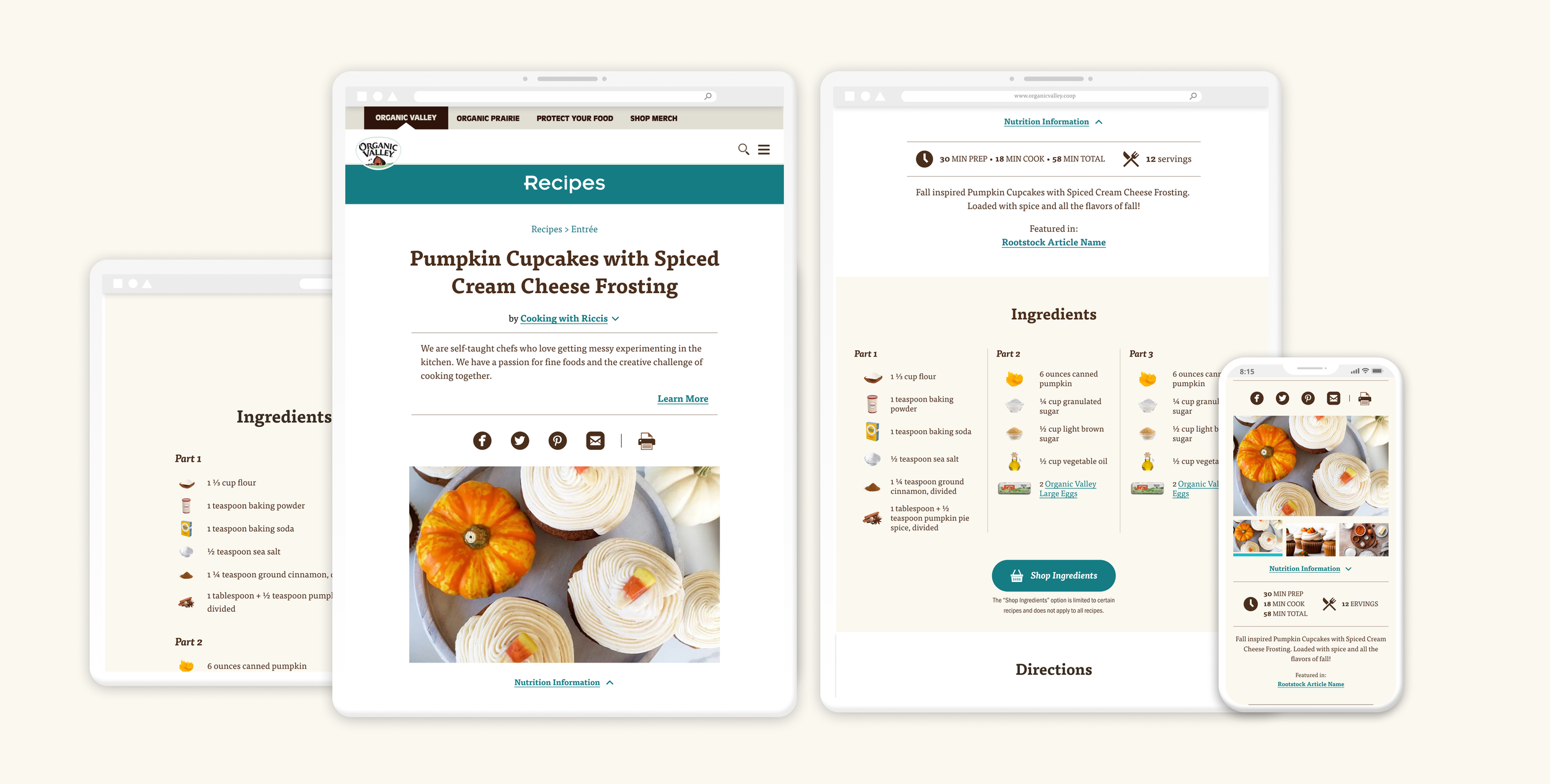
Organic Valley Responsive Recipe Experience
My Role: Senior UX Designer (Co-Lead)
Organic Valley needed to redesign its recipe pages to improve usability, searchability, and content hierarchy for both new users and returning home cooks. I co-led the UX redesign, co-creating scalable, responsive templates and component elements to deliver a consistent, intuitive experience across the full recipe library.
Timeline
Team
Client Webpage
Redesign
Collaborated with Organic Valley’s Content, UX, and Web Dev Teams
September 2024 -
December 2025
Focus
Problem
Organic Valley’s recipe pages were difficult to scan and inconsistent across the library, making it hard for users—especially home cooks in active cooking moments—to quickly find ingredients, steps, and key details. The existing experience lacked reusable patterns, resulting in fragmented layouts across breakpoints.
Goals
Improve usability and scannability for quick, in-the-moment cooking
Create a consistent, scalable recipe system across the site
Design responsive templates and components that work seamlessly on mobile, tablet, and desktop
Support both new users discovering recipes and returning cooks
Solution
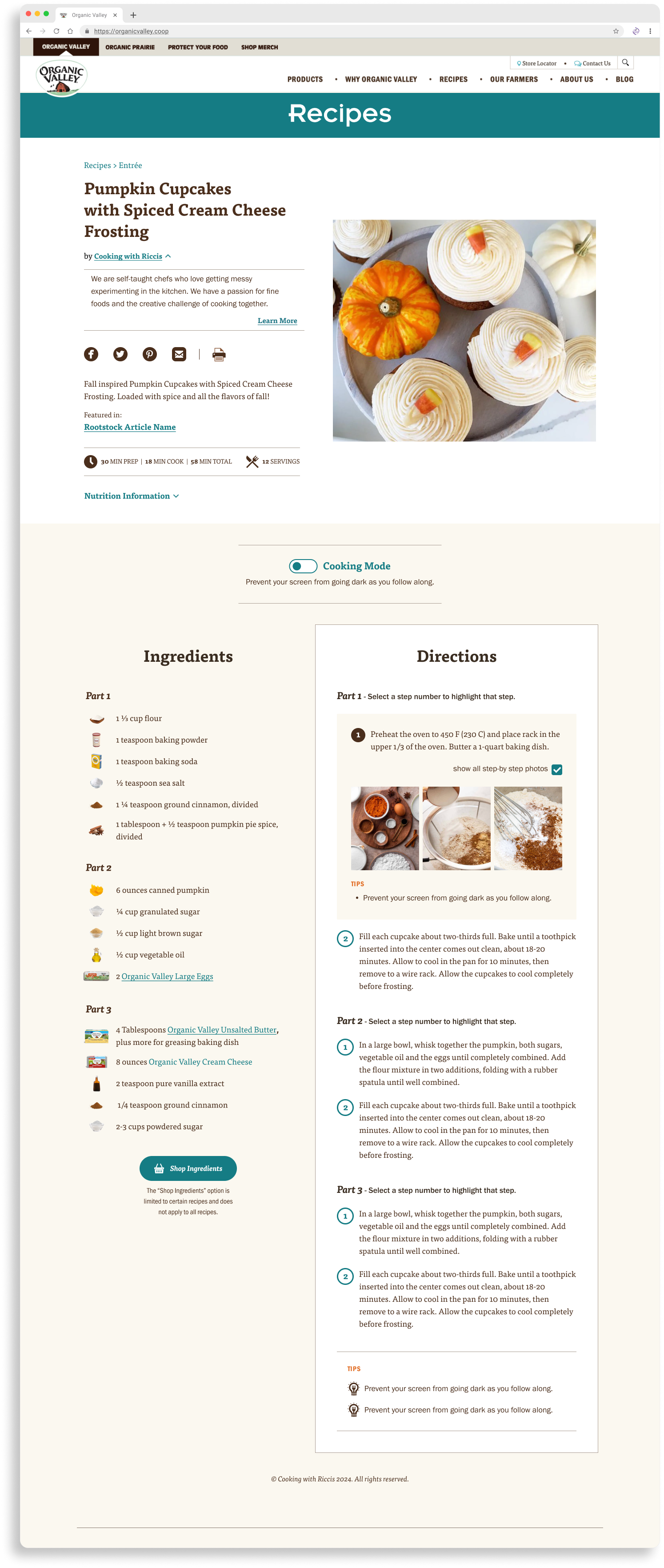
We designed a modular, component-driven recipe template optimized for mobile, tablet, and desktop, balancing flexibility with consistency.
Components I Co-Created
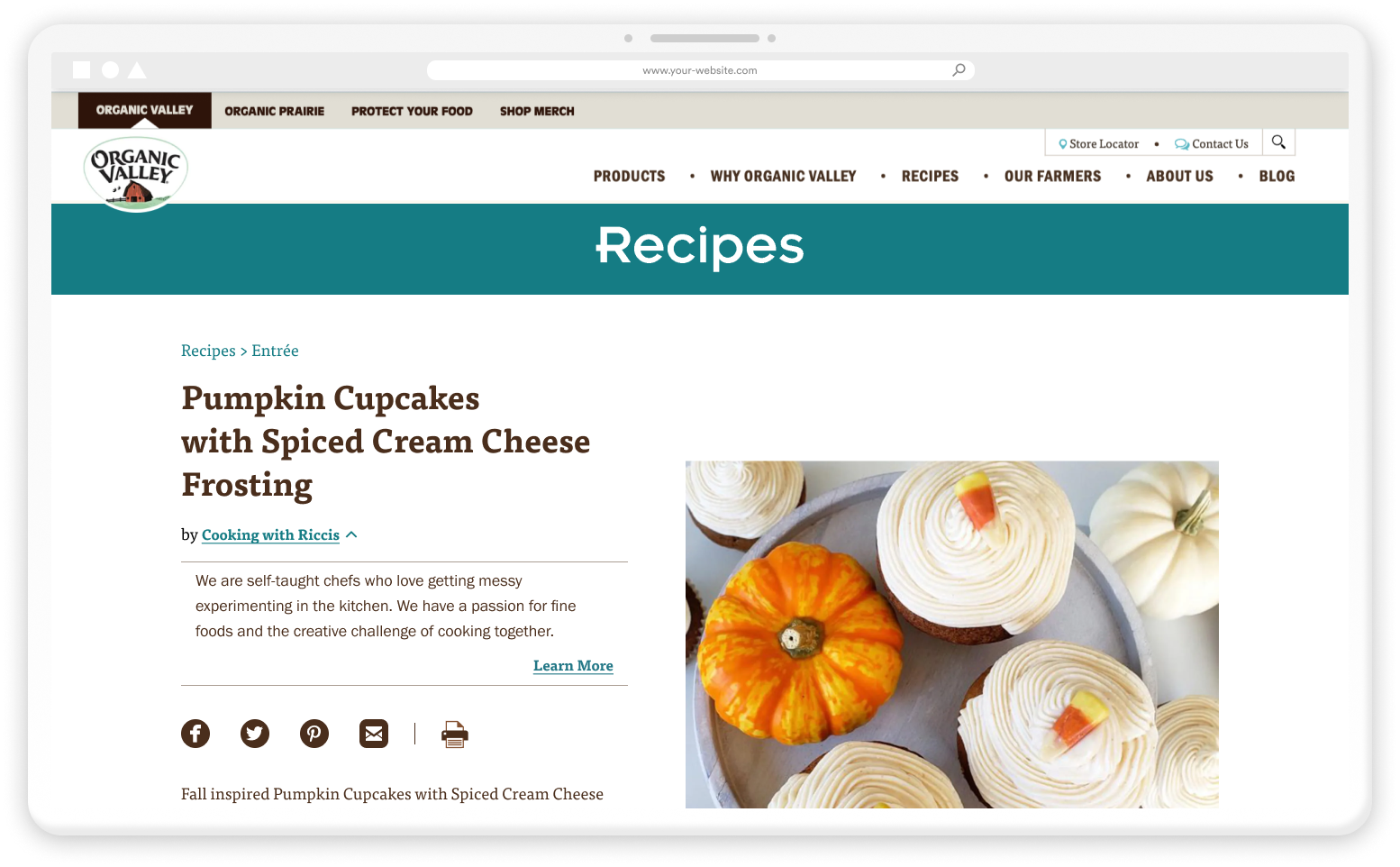
Breadcrumb navigation
Author information module
Social share and print actions
Hero media templates
Ingredients section
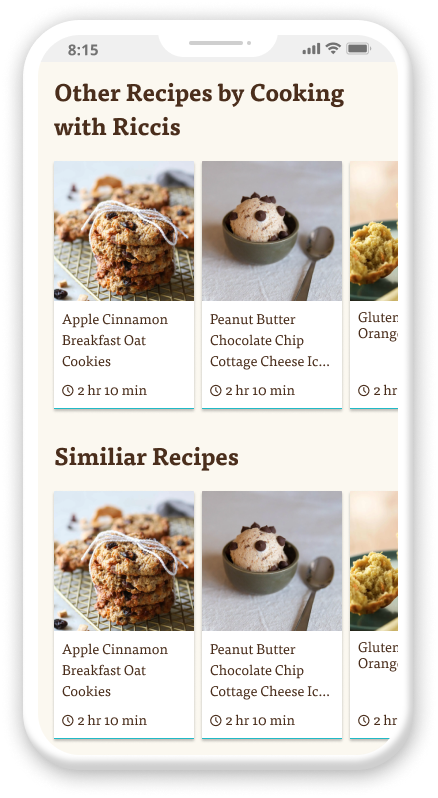
Recipe cards
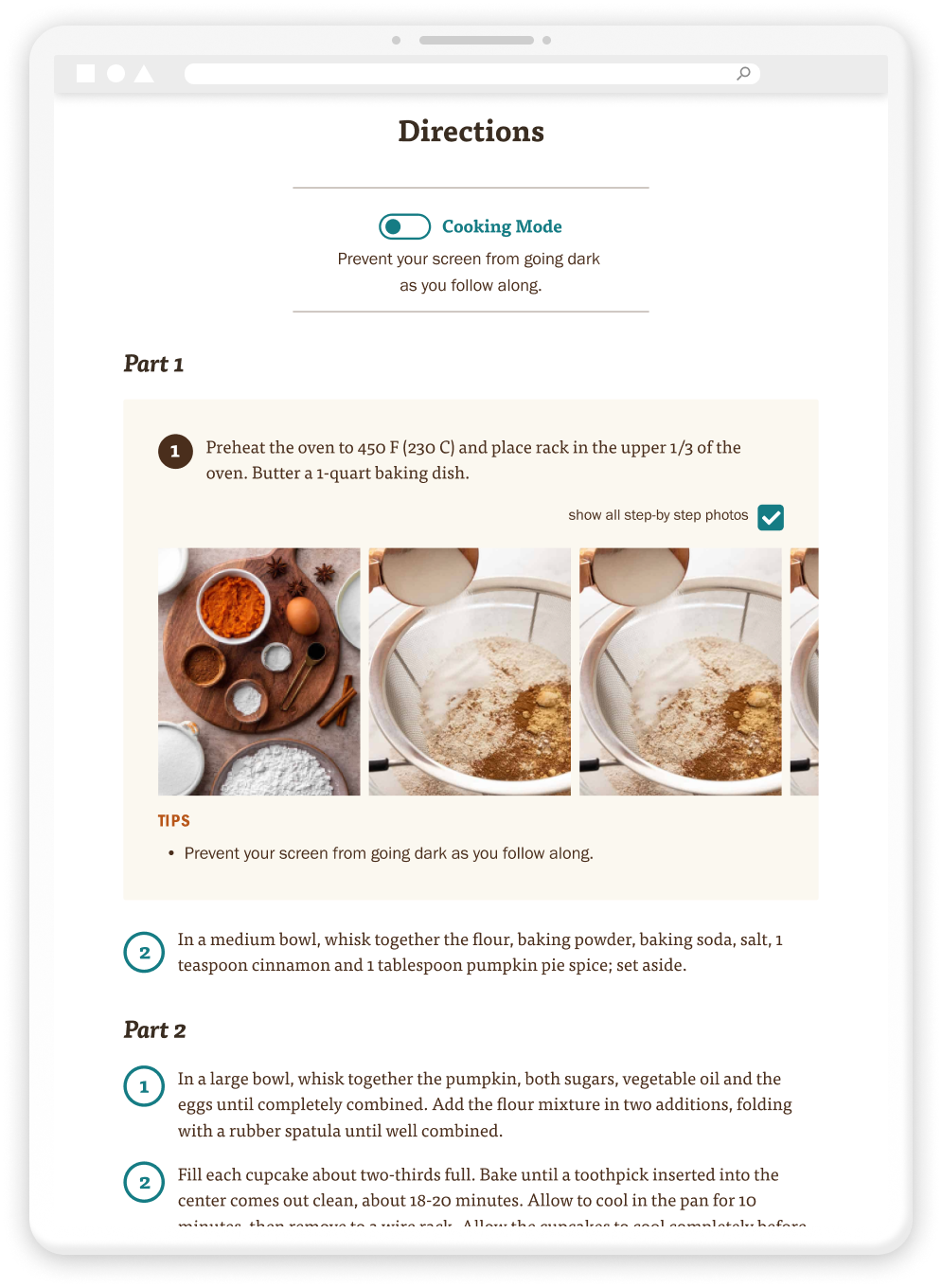
Directions system, including:
Single-step and multi-step flows
Dropdown interactions
Clickable and active states for in-progress steps
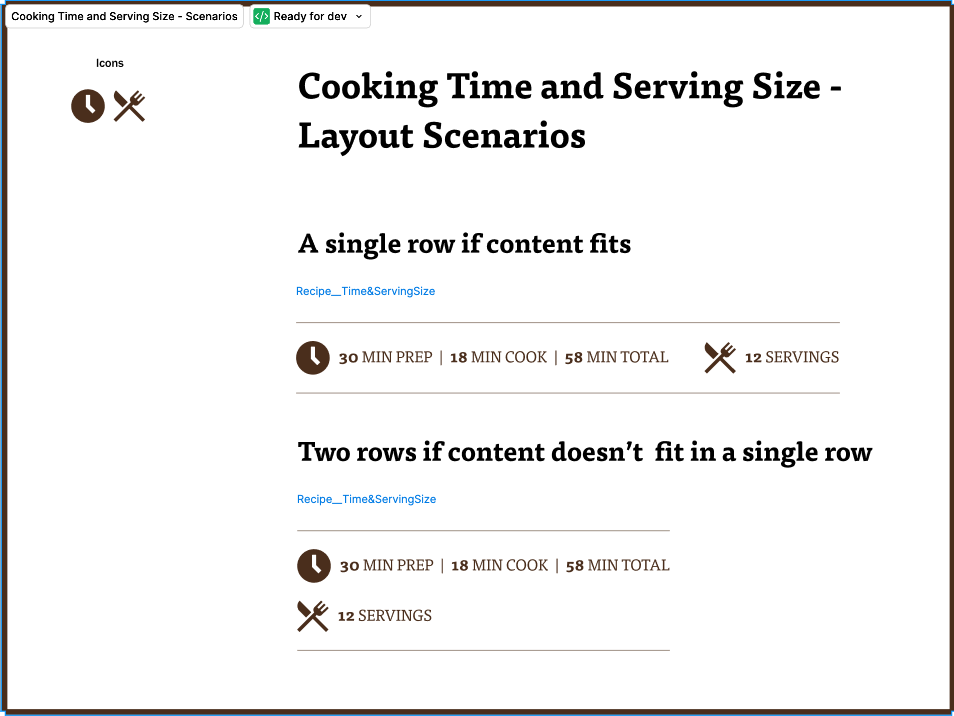
Each component was designed with responsive behavior, interaction states, and scalability in mind.
My Role
I co-led the UX redesign from structure through execution, partnering closely with product, content, and engineering. I focused on component-based design, interaction patterns, and responsive behavior, ensuring the system could scale across the entire recipe library.
Collaboration
Systems
Execution
Discovery & Key Insights
Users needed to move quickly between ingredients and directions while cooking
Long-form recipes required clear hierarchy and progressive disclosure
Inconsistent layouts created friction and increased cognitive load
Reusable components were needed to support future recipe growth and content variation
Key Tradeoffs
Restructured content hierarchy to prioritize the recipe preview, ingredients, and steps
Defined modular blocks: title, summary, tags, ingredients, instructions, tips, and product highlights
Introduced visual affordances for product mentions and seasonal callouts
Collaborated with content team on tone and imagery guidance
Interaction & Systems Thinking
Established clear interaction patterns for expandable and clickable steps
Designed progressive disclosure to reduce cognitive load during cooking
Ensured components worked independently while fitting into a cohesive system
Aligned designs with engineering constraints for efficient implementation
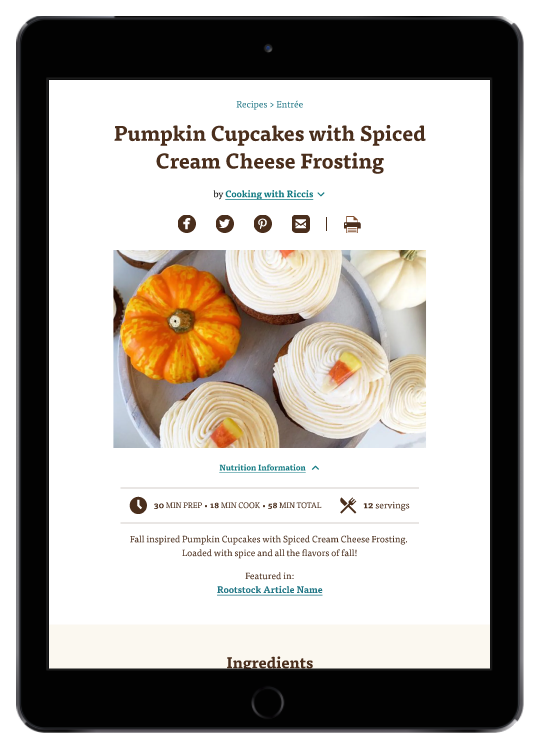
Closed Dropdown
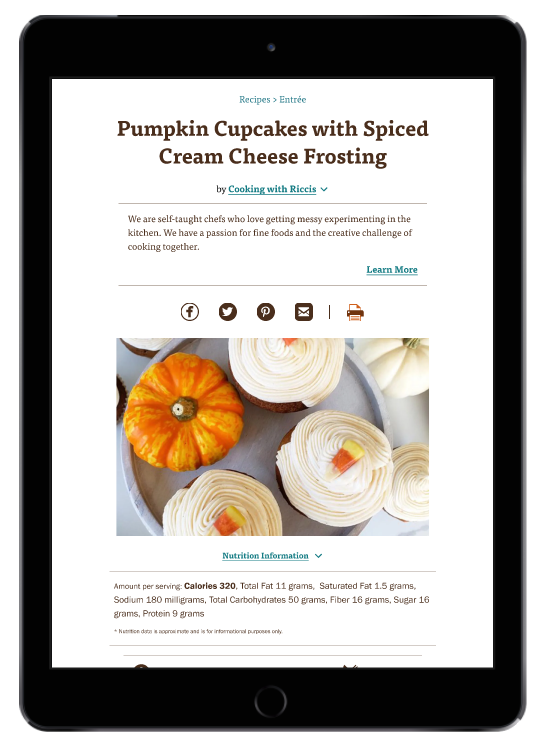
Open Dropdown
Outcome
The final solution delivered a consistent, intuitive recipe experience across the Organic Valley site. The component-based system improved readability, supported repeat use, and enabled faster rollout for developers.
Reflections & Learnings
This project reinforced the value of systems thinking and collaboration—designing flexible components that serve both immediate user needs and long-term business goals.
How I’d Approach This Next Time
To further strengthen the solution, I would introduce lightweight user testing between iterations, particularly focused on in-context cooking behaviors.
Conduct moderated usability testing with home cooks using real recipes on mobile
Test ingredient-to-direction switching, dropdown behavior, and step progression
Validate single-step vs. multi-step direction patterns for clarity and speed
Observe hands-busy moments to refine tap targets, spacing, and interaction states
Use insights to iterate on components before scaling them across the full library
This approach would ensure interaction patterns are not only usable, but optimized for real-world cooking scenarios.